Why Back-to-School Preparation Matters
September is approaching, and for families in Marbella, the transition from long summer days to school routines can be a bigger adjustment than simply buying new uniforms and school supplies.
After weeks of later bedtimes, holidays, travel and extra screen time, children suddenly need to return to early mornings, structured days, homework and extracurricular activities.
The good news? A little preparation can make the back-to-school transition in Marbella in 2026 much easier for both children and parents.
Here is a practical checklist for getting your family ready for the new school year.
When Does School Start in Marbella in 2026?
For the 2026–2027 academic year in Málaga province, school starts on different dates depending on the educational stage.
Most children in Early Childhood Education and Primary School return on 10 September 2026, while Secondary Education and several other levels begin on 15 September 2026.
International and private schools around Marbella may follow different calendars, so families should always confirm the exact first day directly with their child’s school.
That leaves the final weeks of August and beginning of September as the ideal time to gradually rebuild school routines.
1. Reset Sleep Before the First School Morning
One of the hardest parts of going back to school is often the alarm clock.
Summer in Marbella naturally encourages later evenings. Children stay outside longer, families eat later and normal bedtimes can gradually disappear.
Don’t wait until the night before school starts.
Begin moving bedtime and wake-up time earlier in small steps during the final one or two weeks of the holidays.
A gradual adjustment is usually much easier than suddenly expecting a child who has been waking at 10:00 to happily get out of bed at 7:00.

2. Reduce Screen Time Gradually
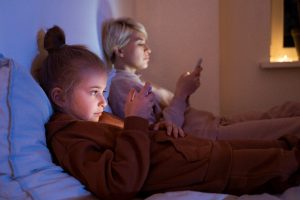
Summer can also mean considerably more time with tablets, phones, gaming consoles and YouTube.
Trying to eliminate that extra screen time overnight can create unnecessary conflict.
Instead, begin reintroducing screen-free periods before school starts.
Good opportunities include:
- during meals;
- the hour before bedtime;
- mornings;
- family outings;
- active play periods.
Most importantly, replace some screen time with something attractive rather than simply taking the device away.
Outdoor play, swimming, cycling, sports and active indoor play can all make the transition easier.
3. Bring Daily Movement Back Into the Routine
Children don’t stop needing physical activity when school starts.
After spending much of the day sitting in classrooms, movement gives children an opportunity to play, interact with others and use their energy in a different way.
Marbella offers plenty of possibilities, from parks and beaches to sports clubs and indoor activities.
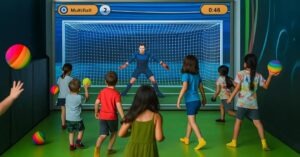
At Kids Arena Marbella, our focus is active play rather than passive entertainment. Children can climb, jump, explore and play together in an indoor environment designed around movement and interaction.
For families with younger children, there is also a dedicated Soft Zone for ages 1–4, while older children can enjoy a wider range of active and interactive experiences.
4. Create a Simple Back-to-School Checklist
Avoid leaving everything until the final weekend.
Check:
- school uniform and shoes;
- backpack;
- notebooks and stationery;
- lunchbox and reusable water bottle;
- school transport arrangements;
- extracurricular schedules;
- medical information required by the school;
- important school dates.
If your child attends an international school, check its calendar separately because term dates can differ from the public-school calendar.
5. Let Children Take Part in the Preparation
Back-to-school preparation shouldn’t be something parents do entirely for their children.
Let younger children choose a lunchbox or organize their backpack.
Older children can prepare their study area, check their timetable and decide how they want to organize homework.
Small responsibilities help turn the return to school into something they participate in rather than something simply happening to them.
6. Don’t Overschedule September
Football. Swimming. Languages. Music. Homework. Birthday parties.
It is surprisingly easy to fill every afternoon.
But the first few weeks of school already involve a major change in routine.
Children also need unstructured time to play, relax and simply do nothing.
Before committing to several extracurricular activities, give your child time to settle into the new school timetable and see how tired they actually are at the end of the day.
7. Prepare for the Emotional Side of Going Back to School
Not every child is excited about September.
Some children worry about a new teacher, changing classrooms, making friends or starting a completely new school.
This can be particularly relevant in an international city such as Marbella, where families frequently arrive from other countries and children may enter a new school environment or language.
Ask specific questions rather than simply asking:
“Are you excited about school?”
Try:
“What are you looking forward to?”
or:
“Is there anything about going back that you’re worried about?”
You may get a much more useful answer.
8. Make Social Time Part of the Transition
School isn’t only academic.
Friendships and social confidence matter too.
If possible, arrange a playdate with classmates before school begins or visit places where children can naturally interact with others.
Shared play can be particularly useful for children who have recently moved to Marbella and are still building their social circle.
9. Create an After-School Routine That Actually Works
The perfect routine on paper isn’t necessarily the routine that works for your family.
A realistic afternoon might include:
School → snack → movement/play → homework → dinner → quiet time → bed
For another child, homework immediately after school may work better.
Watch your child’s energy levels and adjust rather than forcing an unnecessarily rigid schedule.
The objective is consistency, not perfection.
10. Give Parents Some Breathing Room Too
Back to school affects parents as much as children.
School runs, work, shopping, extracurricular activities and appointments quickly fill the week.
Having reliable places where children can enjoy themselves while parents have a little breathing room can make family life considerably easier.
Kids Arena is located in Nueva Andalucía, Marbella, close to Puerto Banús, providing families with an indoor option for active play regardless of strong sun, rain or changing weather.
Parents can relax in the café while children play in the appropriate activity areas.
Back to School Doesn’t Have to Mean Back to Screens
The return to school is an opportunity to reset more than the alarm clock.
It can also be a chance to establish healthier routines around sleep, movement, family time and technology.
Start gradually, keep expectations realistic and leave space for children to play.
Because after a full day of concentrating at school, sometimes what children need most isn’t another screen or another lesson.
They simply need to move.
Looking for Active Kids’ Activities in Marbella?
Discover Kids Arena in Nueva Andalucía — an indoor playground for children aged 1–12, with a dedicated Soft Zone for younger children and active experiences for older kids.
Explore our activities and plan your next visit to Kids Arena Marbella.