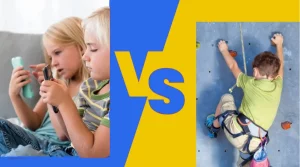
Most parents think screen time is just “watching videos.” BUT It’s not.
Today’s apps, games, and platforms are designed by algorithms that keep children hooked — not learning.
And the effect is deeper than you think.
🧠 What Screen Time Is Really Doing to Your Child’s Brain
Modern apps don’t just entertain — they train the brain.
They reward fast reactions, instant dopamine, and constant stimulation.
Research shows that excessive screen exposure in children is linked to:
- Attention difficulties
- Reduced physical activity
- Sleep disruption
- Emotional and behavioral issues
In some cases, higher screen time is even associated with delays in development and weaker language skills
And here’s the uncomfortable truth:
👉 Algorithms are built to maximize time spent — not child development.
⚠️ The Hidden Problem: Passive vs. Active Brain Use
Not all screen time is equal.
Passive scrolling, autoplay videos, and endless content loops train the brain to:
- Seek constant stimulation
- Lose patience quickly
- Avoid effort
Studies suggest passive screen use is far more harmful than active engagement
Meanwhile, children need the opposite:
✔ Movement
✔ Challenge
✔ Real-world interaction

🧩 Why Physical Play Still Wins
When kids engage in real play, something completely different happens.
They develop:
- Problem-solving skills
- Social interaction
- Motor coordination
- Emotional regulation
And unlike screens, physical play forces the brain to work — not just react.
Research consistently shows that lower physical activity combined with high screen time leads to poorer social and cognitive outcomes
🚫 The Real Risk: Replacing Reality
The biggest danger is not screens themselves.
It’s what they replace.
When children spend hours on screens, they lose:
- Real conversations
- Physical challenges
- Social experiences
And over time, this creates a gap:
👉 Digitally stimulated, but developmentally weaker.
🎯 What Smart Parents Do Instead
You don’t need to eliminate screens.
That’s unrealistic.
But you must control the balance.
Here’s what actually works:
- Limit passive screen time
- Avoid algorithm-driven content loops
- Prioritize real-world activities daily
- Replace “easy entertainment” with active experiences
Because the brain develops through action — not observation.
📍 A Better Alternative in Marbella
If you’re in Marbella, the problem is even more obvious:
Kids spend too much time indoors… but still inactive.
That’s where structured active play changes everything.
At Kids Arena, children move through:
- climbing challenges
- interactive games
- laser maze
- physical activities designed to keep them engaged
No screens. No passive consumption.
Just real play.

🔥 Final Thought
Screens are not the enemy.
But uncontrolled, algorithm-driven screen time is.
And if you don’t replace it with real experiences…
👉 something important is lost.
al regulation.
Looking for a better alternative to screen time in Marbella?
Discover Kids Arena and book your visit today. :Visit www.kidsarena.es today to discover a world of hands-on, enriching kids activities that will truly boost your child’s development and help you find that perfect balance between screen time and essential playtime.
Source
This article is inspired by “How Social Media Impacts Kids’ Brains. 5 Things Parents Should Know, From A Doctor” from Forbes. Read the original here: https://www.forbes.com/sites/jessepines/2025/11/21/does-social-media-cause-brain-damage-5-things-parents-should-know/?ctpv=searchpage