
Screen time is Affecting Our Youngest Kids
As parents and educators in the digital age, we face a constant balancing act. Technology is everywhere, and while it offers incredible tools for older children, its impact on the littlest members of our families—our babies and toddlers—is becoming a growing concern. The question is no longer if infants use screens, but how often and what the long-term effects will be.
The convenience of a moment of silence provided by a glowing screen is tempting, but new research is sounding the alarm. We must move beyond the quick fix and prioritize genuine, active, and developmental kids’ activities to ensure our children’s brains develop naturally and healthily. This guide dives into the latest findings and offers practical, fun solutions to foster development away from the digital world, connecting you with places that champion real-world play, like Kids Arena in Marbella.
The New Normal: What the Data Says About Tiny Tech Users
Recent studies paint a startling picture of device usage among infants and young children. The data reveals that screens are becoming the default “babysitter” much earlier than previous generations experienced. This trend warrants serious attention from families seeking the best ways to support infant development.
Startling Statistics on Infant Screen Use
The numbers are clear: screen time is starting earlier than ever. A significant majority of young children are now exposed to video content before their second birthday.
- YouTube is King (for Babies): A shocking 62% of children younger than two now watch videos on platforms like YouTube, at least occasionally. Just five years ago, that number was much lower. For half of all kids under 12, watching YouTube is a daily activity.
- Smartphones in the Cradle: Nearly 4 out of 10 parents (38%) admit to letting their infants under the age of two play with smartphones.
- The Daily Habit: For children from birth to age four, daily YouTube use is reported by a staggering 51% of parents.
While many parents—up to 42%—acknowledge they could be doing a better job managing screen time, the reality of being busy and tired often leads to giving in to the electronic babysitter. The key is understanding that this is not just harmless entertainment; it’s a critical developmental issue.
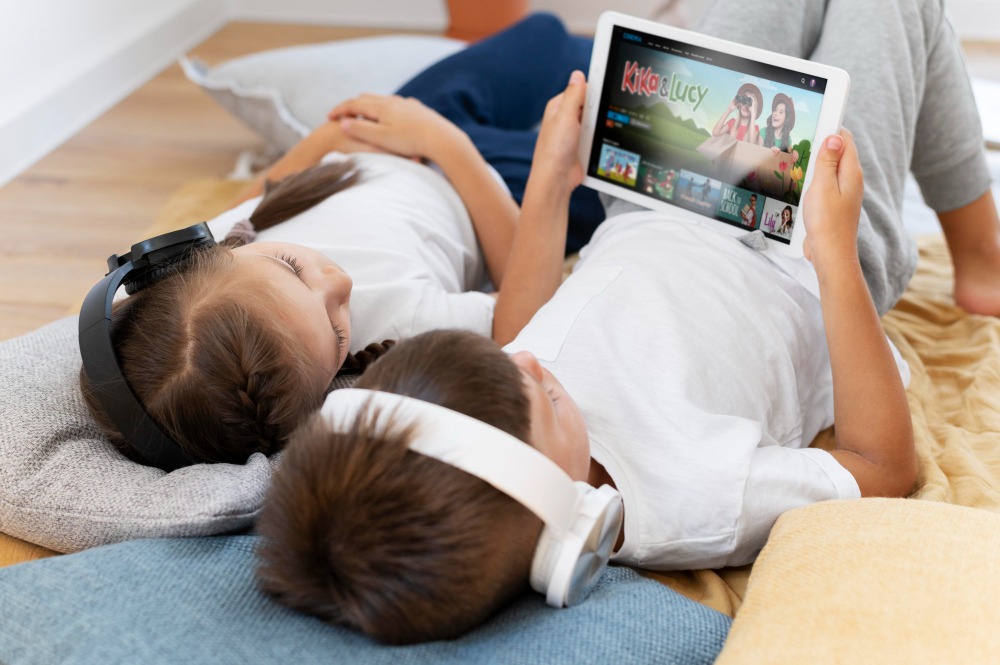
More Than Just a Distraction: The Developmental Risks
When a developing brain interacts with fast-paced, stimulating digital content, it is fundamentally different from engaging in real-world, interactive educational games. Experts warn that this early and heavy exposure to technology can be highly addictive and may alter the physical development of a child’s brain.
Rewiring the Brain: Attention and Language
Digital content, often likened to a “slot machine” in its ability to deliver quick hits of dopamine, can lead to lower attention spans. More critically, when infants are constantly exposed to screens before they even acquire language, it can literally rewire their neuropathways.
- Speech Development: Real language acquisition requires interaction—seeing faces, hearing tones, and mimicking mouth movements. Passive viewing does not provide this crucial feedback loop.
- Attention Span: The constantly changing, high-stimulation input from videos can make the slower pace of real-world learning—like reading a book or focusing on a single toy—seem boring by comparison. This can create challenges when children start school.
- Mental Health: Some experts link early and excessive screen time to potential mental health challenges down the road, as children struggle to manage the stimulation and attention demands of the non-digital world.
The Power of Active, Educational Play
The alternative to passive screen time is active indoor play and play-based learning. This form of engagement is essential for physical, cognitive, and social-emotional growth. When children manipulate kids toys, build structures, and interact with others, they are:
- Developing Fine Motor Skills: Essential for writing and self-care.
- Learning Cause and Effect: Through experimentation, not just observation.
- Building Social Skills: Through turn-taking and sharing during family fun activities.
The best environments for young children are those that encourage physical movement and open-ended exploration, providing rich sensory experiences that screens simply cannot replicate.
The Kids Arena Solution: Prioritizing Active, Real-World Play
Finding quality, screen-free alternatives is the most important step a family can take. This is where active fun centers, like Kids Arena in Marbella, Spain, provide an invaluable service.
Kids Arena is more than just an indoor playground; it is a center dedicated to interactive play and educational adventures designed to stimulate young minds and bodies away from the passive world of screens. It is a safe indoor environment where families can consciously choose physical activity, creative expression, and social interaction.
Why Choose Kids Arena Over the Screen?
When you’re looking for high-quality kids’ activities that support healthy development, a visit to Kids Arena offers:
- Interactive Play Zones: Areas designed for climbing, crawling, and exploring, directly supporting gross motor skill development—the exact opposite of sitting still with a phone.
- Safe Indoor Environment: A controlled space where infants and toddlers can engage in safe active fun, regardless of the weather outside.
- Educational Adventures: Activities that encourage problem-solving and critical thinking through physical challenge and engagement, promoting genuine play-based learning.
- Family Fun Destination: It’s a place for parents to engage with their children, sharing moments of joy and development instead of using a device to create separation.
Choosing to spend an afternoon at Kids Arena is a conscious investment in your child’s attention span, physical health, and emotional well-being. It’s the ultimate antidote to the “electronic babysitter” phenomenon.
We invite all families in the area to discover a vibrant world of active indoor play for their children. For more details on our experiences and opening times, please visit www.kidsarena.es.
Practical Tips for Screen-Free Fun
Shifting away from a reliance on screens takes effort, but the rewards for your child’s development are immense. Here are strategies for promoting family fun and healthy habits:
- Set Clear Boundaries Early: The American Academy of Pediatrics (AAP) recommends avoiding screens entirely for children under 18-24 months, with exceptions only for video chatting. For older toddlers, keep screen time to a minimum (no more than one hour per day of high-quality programming, always with a parent).
- Use Active Toys and Materials: Prioritize open-ended kids toys like blocks, puzzles, and art supplies that require physical interaction and imagination.
- Engage with Them: The most powerful way to limit screen use is to offer a better alternative. Get down on the floor and join their play. Your voice and face are the best interactive teaching tools.
- Plan Active Outings: Integrate screen-free kids’ activities into your routine. A trip to a park, a hike, or a visit to an indoor active center like Kids Arena makes active fun the default choice.
By creating a home and lifestyle that prioritizes real-world engagement, we equip our children with the attention, cognitive skills, and emotional resilience they need to thrive in a complex world. Give your child the gift of active play today!
Source
This article is inspired by Babies & Smartphones: 38% Of Parents Let Infants Use Phones, 62% Set Them Up On YouTube from Forbes. Read the original here: https://www.forbes.com/sites/johnkoetsier/2025/10/08/babies–smartphones-38-of-parents-let-infants-use-phones-62-set-them-up-on-youtube/?ctpv=searchpage